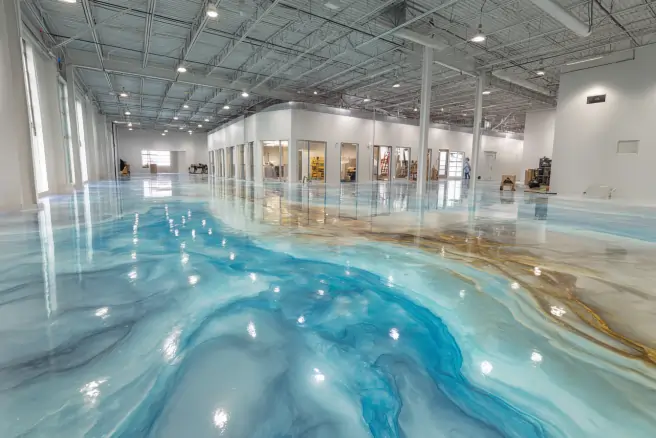
1. Exceptional Durability
Epoxy flooring is renowned for its strength and ability to withstand heavy loads. Whether you park multiple vehicles in your garage or use the space as a workshop, epoxy can endure the weight without cracking or deteriorating over time.
Key durability benefits include: – Resistance to wear and tear: With proper maintenance, epoxy floors can last for years without showing significant signs of damage. – Impact resistance: Dropping tools or heavy equipment on epoxy flooring is less likely to cause chips or dents compared to other surfaces. – Load-bearing capacity: Ideal for garages housing heavy machinery or storage racks.
2. Low Maintenance Requirements
One of the standout features of epoxy flooring is how easy it is to maintain. Dust, debris, and spills can be quickly cleaned without extensive effort.
Maintenance highlights include: – Easy cleaning: Sweeping or mopping is often sufficient to keep the surface looking pristine. – Stain resistance: Accidental spills from oil, chemicals, or other liquids are less likely to leave permanent marks. – No grout lines: Unlike tiled surfaces, the seamless nature of epoxy eliminates crevices where dirt accumulates.
3. Enhanced Aesthetics
Epoxy flooring transforms an ordinary garage into a polished and professional-looking space. With endless design options available, homeowners can customize their floors according to their preferences.
Customization features: – A variety of colors and finishes (e.g., matte, glossy, metallic). – Decorative flakes or quartz sand for added texture and visual interest. – Patterns that mimic natural stone or terrazzo effects.
| Finish Type | Description | Best For |
| Glossy | High-shine surface for a sleek look | Modern garages |
| Metallic | Reflective appearance with depth | Luxury transformations |
| Flake System | Embedded decorative chips | Durable yet stylish finishes |
4. Improved Safety Features
Safety shouldn’t be overlooked in any functional space like a garage. Epoxy coatings often come with non-slip additives that reduce the risk of accidents caused by wet floors.
Safety benefits: – Slip-resistant options available. – Improved visibility due to light-reflective properties. – Resistance against fire hazards if treated with flame-retardant coatings.
5. Cost Efficiency Over Time
Although installing epoxy might require an upfront investment, it proves cost-effective in the long run due to reduced maintenance expenses and its long lifespan.
Why it’s cost-efficient: – Minimal repair needs compared to other flooring types. – Eliminates frequent replacement costs thanks to its durability. – Adds value to your property during resale by enhancing overall aesthetics and functionality.
Epoxy garage flooring offers numerous advantages that make it a worthwhile investment for homeowners seeking durability, style flexibility, safety enhancements, and long-term savings—all while elevating the performance of their space effectively.
The Durability and Long-Lasting Resilience of Clearwater Epoxy Garage Flooring
Epoxy flooring is widely recognized for its unmatched durability and ability to withstand significant wear and tear. This quality makes it a popular choice for both residential and commercial spaces. Whether you’re looking to upgrade a garage, warehouse, or showroom, epoxy flooring offers long-term performance with minimal maintenance.
Key Features an Epoxy Garage Flooring Contractor Clearwater FL Brings to Durability
- Epoxy floors can endure the weight of heavy vehicles, machinery, and equipment without cracking or deteriorating.
- Ideal for garages, industrial spaces, and areas that frequently support heavy loads.
- The tough surface layer prevents scratches and scuff marks caused by moving objects or foot traffic.
- Retains its polished appearance over time even in high-traffic environments.
- Epoxy coatings create a seamless surface that resists water infiltration.
- Prevents damage caused by moisture seepage, including warping or weakening of subfloor materials.
- Protects against damage from spills of oils, gasoline, chemicals, or cleaning agents in garages or industrial facilities.
Choosing the Best Epoxy Flooring Installers Clearwater FL for Long-Lasting Floors
Freedom Epoxy
7003 114th Ave Suite D, Largo, FL 33773
(866) 805 5734
https://freedomepoxy.com
With proper installation and routine care, epoxy flooring can last between 10 to 20 years in residential settings and up to 10 years in commercial spaces with heavy usage. Its long lifespan reduces the need for frequent replacements compared to traditional flooring options like concrete sealers or tiles.
| Flooring Type | Average Lifespan | Maintenance Required | Durability Rank |
| Epoxy Flooring | 10-20 years | Low (occasional cleaning) | High |
| Polished Concrete | 5-10 years | Medium (resealing needed) | Medium |
| Vinyl Tile | 5-8 years | High (frequent upkeep) | Low |
Advantages of Long-Term Durability
- Cost-Efficiency: The longevity of epoxy floors minimizes repair costs over time compared to less durable materials.
- Environmental Benefits: Reduced replacements mean less waste sent to landfills.
- Enhanced Safety: Cracks or damages on surfaces can create hazards; epoxy’s resilience mitigates these risks.
Best Practices for Maintaining Durability
- Clean the surface regularly using non-abrasive mops or soft bristle brushes.
- Avoid dragging sharp objects across the floor that could cause superficial damage.
- Reapply a topcoat every few years if needed in high-wear areas.
- Use protective mats under heavy equipment or vehicles for added protection.
By following these best practices, you’ll preserve the strength and beauty of your epoxy flooring for many years while maintaining its superior durability characteristics over alternative options commonly used today.
Understanding the Chemical and Stain Resistance of Epoxy Floors
Epoxy flooring is widely recognized for its excellent durability, but one of its standout features is its superior chemical and stain resistance. This property makes epoxy an ideal choice for both residential and commercial spaces where exposure to harsh substances, spills, or stains is a common occurrence. Below, we’ll explore how this resistance works and why it’s such a valuable asset for your flooring.
How Epoxy Resists Chemicals
- Non-porous Surface: Unlike other materials like concrete or wood, epoxy does not absorb liquids or chemicals, providing exceptional protection against potentially corrosive substances.
- Chemical Inertness: The strong molecular bonds in epoxy make it resistant to degradation when exposed to acids, solvents, oils, or other industrial chemicals.
These properties make epoxy flooring especially beneficial in environments like garages, warehouses, factories, and laboratories where exposure to harmful substances is frequent.
Common Chemicals Epoxy Can Withstand
| Chemical/ Substance | Effect on Epoxy Flooring |
| Motor Oil | No staining or absorption occurs |
| Acids (e.g., sulfuric acid) | Minimal-to-no corrosion when cleaned quickly |
| Cleaning Agents | Highly resistant to bleach and detergents |
| Solvents (e.g., acetone) | Durable against short-term exposure |
This versatility ensures that epoxy floors remain functional and visually appealing even in challenging conditions.
Exceptional Stain Resistance Properties
- Easy Maintenance: Since liquids do not seep into the material’s surface, they can be cleaned with minimal effort using simple tools like mops or microfiber cloths.
- Preserves Appearance: Stains that would typically discolor other surfaces are unable to penetrate the protective coating of epoxy floors. This helps maintain their pristine appearance over time.
Ideal Applications of Chemical-Resistant Epoxy Floors
- Protects against oil leaks from vehicles.
- Handles exposure to road salts without deterioration.
- Resists accidental spills from lubricants or solvents.
- Suitable for environments requiring heavy cleaning with industrial-grade chemicals.
- Prevents long-term staining from oils and acidic ingredients.
- Meets hygiene standards due to easy-to-clean surfaces.
- Reduces risk of contamination by resisting blood stains and cleaning solutions.
Tips for Maintaining Chemical Resistance Over Time
- Clean spills promptly using pH-neutral cleaners where possible.
- Avoid dragging sharp objects across the surface that could compromise the coating integrity.
- Perform periodic resealing if recommended by your installer.
By understanding how epoxy floors combat chemical damage and staining while requiring minimal upkeep effort, you can confidently invest in this solution knowing it’s designed for longevity and practicality in demanding settings.
Understanding the Chemical and Stain Resistance of Epoxy Floors
Epoxy flooring is renowned for its exceptional chemical and stain resistance, making it one of the top choices for both residential and commercial spaces. This quality not only enhances its functionality but also ensures long-lasting performance in environments prone to spills or harsh chemicals. Below, we explore how this feature works and why it’s so beneficial.
Chemical Resistance: A Key Advantage
Epoxy floors are highly resistant to a wide range of chemicals, including acids, solvents, oils, and other industrial substances. This feature is particularly valuable in spaces like garages, warehouses, laboratories, and food processing facilities where accidental chemical spills are common.
- Industrial Applications: Epoxy can withstand exposure to cleaning solutions, automotive fluids (like oil and brake fluid), as well as corrosive agents.
- Household Benefits: In residential garages or basements prone to minor chemical exposure (e.g., cleaning products or pet-related accidents), epoxy creates a durable barrier that resists damage.
The key to this resistance lies in the chemical composition of epoxy itself. Once cured, epoxy forms a dense polymer structure that prevents liquids from seeping into the surface.
Stain Resistance Explained
- Oil and grease
- Food spills
- Rust marks from tools or storage items
- Tire marks in garages
This resistance comes from the non-porous nature of an epoxy coating. Unlike porous surfaces that absorb liquids, epoxy creates a seamless layer that repels them effectively.
| Substance Type | Impact on Non-Epoxy Surfaces | Impact on Epoxy Flooring |
| Oil/Grease | Permanent stains may occur | Wipes away easily |
| Acidic Substances | Corrosion or discoloration | Minimal to no damage |
| Paint Spills | Difficult to remove | Simple cleanup |
Easy Maintenance with Epoxy Floors
- Daily Cleaning: Sweep regularly with a soft-bristle broom or dust mop.
- Spill Management: Wipe up spills immediately using a damp cloth or mop.
- Deep Cleaning: Use mild cleaners (such as diluted ammonia) for periodic cleaning without worrying about damaging the surface.
- Avoid Abrasives: Stay away from harsh scrubbing pads or acidic cleaners that could dull the finish over time.
Why It Matters for Homes & Businesses
- In homes: Garages used for car maintenance stay clean despite oil drips or tire marks.
- In businesses: Industrial sites reduce downtime caused by spill-related maintenance needs while maintaining a professional appearance.
By resisting both chemical damage and unsightly stains, epoxy flooring provides peace of mind alongside practical benefits—making it one of the most reliable solutions on the market today.
Safety Features of Epoxy Flooring for Homes and Businesses
Epoxy flooring is not only known for its durability and aesthetic appeal, but it also offers critical safety features that make it a smart choice for both residential and commercial spaces. These safety features enhance the functionality of the flooring while ensuring a secure environment for occupants. Below, we outline the key safety benefits epoxy flooring provides.
Slip-Resistance Options
One of the most significant safety advantages of epoxy flooring is its customizable slip-resistant surface. Slips and falls are a common hazard in both homes and workplaces, but epoxy coatings can be enhanced with additives to reduce this risk.
- Textured Additives: Materials like aluminum oxide, quartz sand, or polymer grit can be integrated into the epoxy topcoat to create a slip-resistant surface.
- Anti-Slip Coatings: Specialized anti-slip finishes are available for areas with high moisture exposure, such as garages, kitchens, and industrial spaces.
These enhancements make epoxy floors particularly useful in environments where wet surfaces or heavy foot traffic can create hazards.
High Visibility for Safer Movement
Epoxy flooring’s ability to reflect light significantly improves visibility in any space. This is especially important in large industrial facilities or dimly lit garages where clear visibility is essential to avoid accidents.
- Glossy Finish: The shiny surface reflects natural and artificial light, brightening up even poorly lit areas.
- Custom Markings: Epoxy floors allow for the application of line markings or color-coded zones to direct traffic flow in warehouses or manufacturing facilities.
By improving visibility, epoxy floors contribute to safer navigation within your space.
Fire Resistance
The chemical composition of certain types of epoxy coatings provides excellent fire resistance under specific conditions. This feature is particularly valuable in industrial settings or areas prone to high temperatures.
Some fire-resistant properties include: – Slowing down flame spread. – Reducing smoke generation during combustion. – Offering an additional layer of protection over flammable concrete surfaces.
For businesses handling combustible materials, this characteristic enhances overall workplace safety.
Chemical Spill Containment
Epoxy flooring creates a seamless barrier that resists chemical absorption. In garages, laboratories, or factories where spills often occur, this feature prevents dangerous chemicals from seeping into underlying surfaces—avoiding potential reactions or contamination.
Key benefits include: – Easier cleanup after spills. – Reduced risk of chemical burns or toxic fumes. – Protection against long-term damage caused by leaks.
Impact Absorption and Crack Resistance
Whether used at home or in an industrial setting, epoxy’s shock absorption capabilities help reduce sudden impacts that may cause accidents. The hard yet slightly flexible nature of quality epoxy coatings minimizes cracks or chips if heavy tools are dropped on them—ensuring structural stability even after significant wear and tear.
| Safety Feature | Benefit | Ideal Applications |
| Slip-resistance | Prevents slips and falls | Garages, kitchens, warehouses |
| Light reflectivity | Enhances visibility | Garages, basements |
| Fire resistance | Reduces flames’ spread | Factories handling flammable items |
| Seamless surface | Containment of spills | Laboratories |
By addressing these critical safety concerns while also offering impressive style and durability options, epoxy floors have become an essential solution across diverse residential and commercial settings.
Types of Epoxy Coatings and Their Unique Benefits Explained
Epoxy flooring is a durable, stylish, and functional solution for both residential and commercial spaces. Choosing the right type of epoxy coating can significantly impact the performance, appearance, and longevity of your flooring. Below, we explore the various types of epoxy coatings and highlight their unique features and advantages.
1. Self-Leveling Epoxy Coatings
Self-leveling epoxy is ideal for creating a smooth, seamless surface over existing concrete floors. It is often used in warehouses, garages, kitchens, and other high-traffic areas due to its durability.
Key Benefits: – Hides imperfections such as cracks or dents in concrete. – Provides a high-gloss finish that enhances aesthetics. – Resistant to abrasions and chemicals.
Common Applications: | Area | Reason for Use | |———————|—————————————| | Garages | Durable surface that withstands heavy tools. | | Manufacturing Plants | Resistance against wear from machinery. | | Healthcare Facilities| Easy to clean and hygienic surface. |
2. Metallic Epoxy Coatings
Metallic epoxy coatings offer a decorative finish with a unique three-dimensional look. These coatings are mixed with metallic pigments to create swirls or patterns resembling marble or liquid metal.
Key Benefits: – Creates visually striking designs. – Highly durable with excellent resistance to chemicals. – Non-slip options available despite its glossy appearance.
Best For: – Showrooms – Office lobbies – Living rooms or upscale garages
3. Anti-Static Epoxy Coatings (ESD Epoxy)
Electrostatic discharge (ESD) can harm sensitive electronic equipment in industrial environments or labs. Anti-static epoxy coatings are designed to prevent static buildup on the floor surface.
Key Benefits: – Protects electronic equipment from damage. – Reduces risks of fire hazards caused by static discharge. – Suitable for environments requiring strict safety standards.
Common Uses Include:
- Electronics manufacturing facilities
2. Chemical processing plants
3. Data centers
4. Gravel or Quartz-Filled Epoxy Coatings
Quartz-filled epoxy combines tinted quartz particles with resin to create a durable surface with enhanced slip resistance.
Key Benefits: – Exceptional strength suitable for areas subject to heavy loads. – Slip-resistant surface improves safety. – Available in decorative finishes with customizable colors.
Applications: | Area | Purpose | |———————–|———————————-| | Commercial Kitchens | Prevents slips on wet surfaces | | Schools | Durable solution for hallways | | Sports Venues | Resilient under heavy foot traffic|
5. Epoxy Flake Coatings
Epoxy flake coatings incorporate small vinyl flakes into the resin mixture to create a textured surface with multi-colored specks.
Unique Advantages: – Hides dirt, scratches, or imperfections effectively. – Adds texture for improved traction. – Customizable patterns enhance design flexibility.
This type of coating is particularly popular in:
- Residential garages
2. Locker rooms
3. Retail stores
By understanding the various types of epoxy coatings available and their benefits, you can choose the one that best meets your needs while elevating both functionality and aesthetics in your space.
DIY vs. Professional Installation: Choosing the Right Option for Your Epoxy Flooring
When considering epoxy flooring for your space, one of the most important decisions to make is whether to handle the installation yourself or hire a professional. Each approach comes with its own set of benefits and challenges. Below, we’ll dive into the factors that can help you determine which option is best for your specific needs.
Advantages of DIY Epoxy Flooring Installation
- Cost Savings: DIY installation eliminates labor costs, making it a more budget-friendly option upfront.
- Learning Opportunity: For those who enjoy tackling new challenges, installing an epoxy floor can be an educational and rewarding experience.
- Control Over Process: By handling it yourself, you have full control over every step of the process, including preparation and application.
Challenges of DIY Installation
- Properly preparing the concrete surface is critical for epoxy adhesion.
- This often involves cleaning, degreasing, repairing cracks, and etching or grinding the surface—a process that requires specific tools and expertise.
- Achieving a smooth, bubble-free finish demands precision and experience.
- Uneven application can result in peeling or flaking over time.
- From preparation to curing (which can take days), DIY installation requires significant time investment.
- Most manufacturers may not honor warranties if improper installation methods are used during a DIY project.
Benefits of Professional Epoxy Floor Installation
- Professionals use industrial-grade equipment like diamond grinders to ensure proper adhesion and longevity.
- Skilled installers can create intricate designs or apply advanced finishes like metallic or quartz coatings.
- Experienced teams complete installations faster while adhering to quality standards.
- Many professional services come with warranties covering material defects or workmanship issues.
| Feature/Consideration | DIY Installation | Professional Installation |
| Cost | Lower upfront cost | Higher initial investment |
| Skill/Experience Needed | High learning curve | Completed by experienced experts |
| Surface Preparation | Requires renting/buying tools | Handled by professionals |
| Time Commitment | Significant | Minimal for property owners |
| Finish Quality | May lack precision | Superior craftsmanship |
Factors to Consider When Deciding
- Budget Constraints: If initial cost is your primary concern and you’re confident in your abilities, DIY may be viable.
- Project Size and Complexity: Larger spaces or intricate designs typically require professional expertise.
- Long-Term Goals: Investing in professional installation ensures durability and polished aesthetics that last longer.
While both options have their merits depending on your circumstances, carefully evaluating these factors will help you make an informed choice that aligns with your needs.
- 5 Game-Changing Advantages of Choosing an Epoxy Flooring Company Clearwater FL for Your Garage
- Epoxy Flooring Company Clearwater FL: The Gold Standard for Durable and Stylish Garage Floors
- Top Reasons to Choose an Epoxy Flooring Company Clearwater FL for Your Home or Business
- Epoxy Flooring Company Clearwater FL: Comparing Epoxy to Other Flooring Options for Your Needs
- Benefits of Choosing Clearwater Epoxy Garage Flooring for Your Space
- How to Choose the Best Epoxy Flooring Company Clearwater FL for Your Needs